
The Oldest Technology on Earth
Before farming, before writing, before the wheel, human beings sat in the dark and made music on purpose.

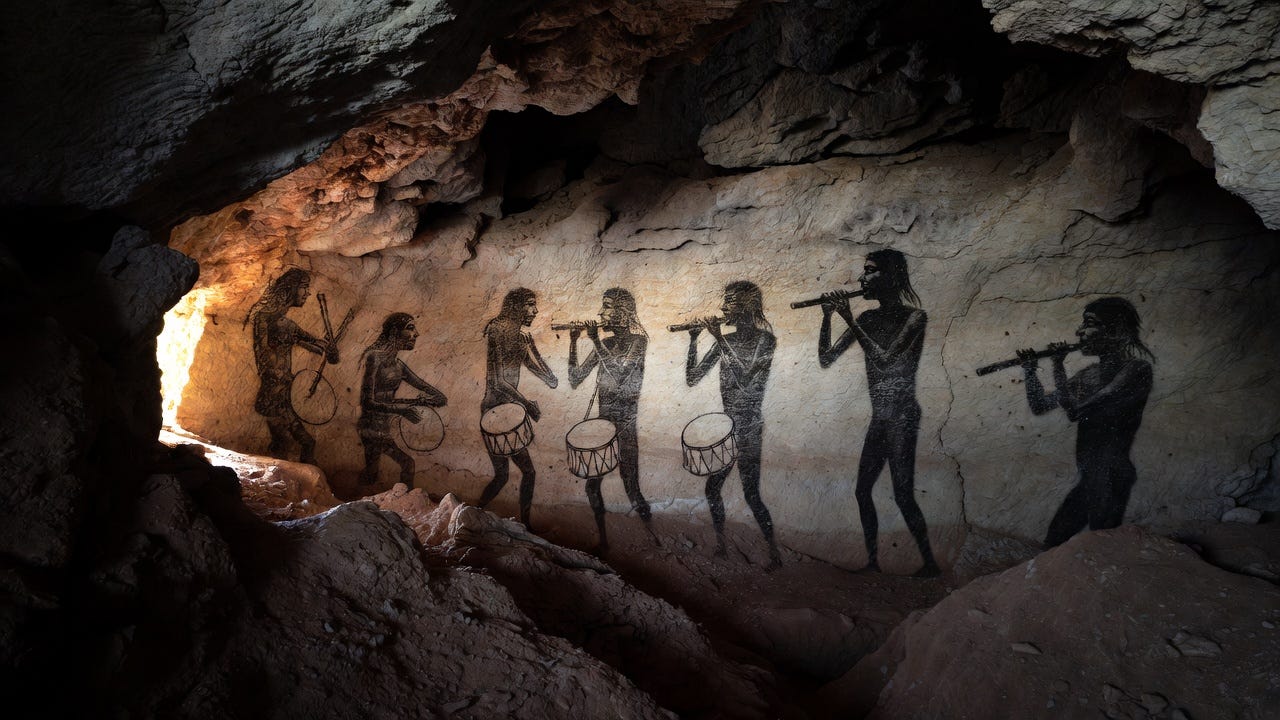
Forty thousand years later, science is finally explaining why. And it is not what the wellness industry has been selling you. Start with one number, because it broke my brain the first time I sat with it.
The oldest musical instrument ever found is roughly forty thousand years old. A flute, carved from the wing bone of a vulture and the ivory of a mammoth, pulled out of a cave in southern Germany. Some flutes from those same caves date back forty two to forty three thousand years.
Hold that number, because of what surrounds it. That flute is older than farming. Older than the wheel. Older than writing by more than thirty thousand years. Older than the pyramids by a factor of ten. Before human beings learned to grow food, before we built a single city, before we wrote a single letter of a single alphabet, we sat in a freezing cave, in a fight for survival, and carved finger holes into bone so we could make a specific sound.
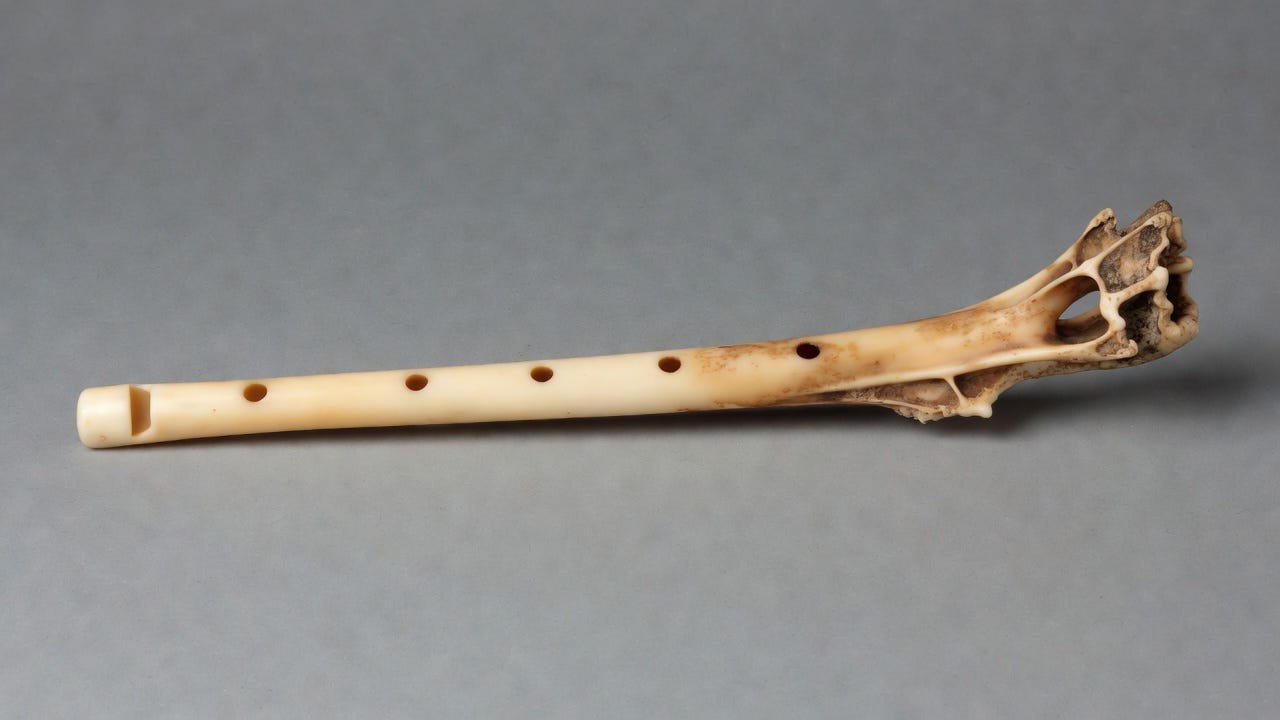
That is not a hobby. You do not spend that kind of effort, in those conditions, on something that does nothing. Which leaves one question, and I have spent a decade chasing it.
What was it for?
Because when you follow music back through every culture that ever lived, something shows up that should not be possible. Civilizations that never met, separated by oceans and by thousands of years, reached for the same tool. And they used it for the same handful of jobs. This is the story of those jobs, what the ancients knew, and what a laboratory can now prove.
It is not a spiritual story. I am going to take a wrecking ball to the mystical version of it before the end, because the mystical version is a lie, and the real one is a hundred times more astonishing.
Music reaches a place words cannot
Language feels like our deepest human ability. It is younger and shallower than we think, and here is how we know.
Some stroke patients lose speech completely. The damage takes their words. They cannot force out a sentence. Then a therapist asks them to sing the sentence, and the words arrive. This is a real clinical technique called melodic intonation therapy. The speech is gone, and the song survives, because music lives in parts of the brain that language does not.
The same truth waits at the other end of a life. People in the late stages of dementia stop recognizing their own children. Their own name leaves them. Play a song from when they were nineteen, and they return. They sing every word. Music reaches a version of them that language can no longer touch.
Sit with what that means. Music is not a decoration sitting on top of the mind. It is wired underneath everything, closer to the core than the words we think define us. So when I say our ancestors used sound as a tool, understand the size of the claim. They found a channel into the human nervous system deeper than anything else we have. And they found it everywhere, independently, over and over.
The pattern that should not exist
In 2019, a team out of Harvard ran the entire world of human music through hard science and published it in Science. They built a database of music from sixty societies across every inhabited continent. Hunter gatherers. Farmers. Island cultures. People with little or no contact with the modern world.
The findings are the fingerprint of something universal.
Every society they studied makes music. Not most. All of them. There is no human culture on record without it.
And across cultures that never met, music does the same specific jobs the same specific ways. Dance music runs fast and rhythmic, everywhere. Lullabies run soft and slow, everywhere. Then they played these songs to untrained listeners in sixty countries, songs from cultures those listeners had never heard, and people could correctly identify what each song was for. This one is for dancing. This one soothes a baby. This one heals. This one is love.
Strangers, guessing the purpose of music from cultures they had zero exposure to, and getting it right. That only happens when people are not copying each other. It happens when they are all discovering the same thing about being human.
So what did they all discover? Five jobs. Here they are.
One. Sound is medicine
The ancient Greeks did not separate music from healing. Their god Apollo governed both. Same deity, one for song and one for medicine, because to them it was obviously one thing. One of the oldest stories in the Western canon is a young man named David playing a lyre to pull a king out of a black depression. Whatever you believe about the source, it is a three thousand year old record of a person using sound to change another person’s state on purpose.
For most of history you could wave all of this away as ritual and belief. Then the machines got good enough to look inside.
Give a person with Parkinson’s disease a steady beat to walk to. Parkinson’s freezes people mid step, and it resists medication and even brain surgery. A meta analysis pooling eighteen controlled studies and seven hundred and seventy four patients found the beat increased their stride length, sped their walking, cut the freezing episodes where they get stuck, and improved their scores on the standard clinical rating scale for the disease.
A rhythm did that. Not a drug. The same technique helps stroke patients relearn to walk. The Greeks put music and medicine under one god because they watched it work for three thousand years. We finally proved why.
Two. Sound controls your state
Every mother who ever lived arrived at the lullaby. Every army that ever marched to war marched to a drum. Every crew that ever hauled a heavy load did it to a work song. Fast rhythm to move the body, slow rhythm to settle it, discovered again and again across the whole species.
The mechanism removes the doubt. Your heart rate, your breathing, and your steps physically lock onto an external beat. Scientists call it entrainment, and it is measurable, not poetic. Put on a faster track and your physiology climbs to meet it. That is why the right song changes a room in seconds, before you have decided to feel anything.
It goes chemical. In 2011, researchers at McGill scanned people’s brains while they listened to music that gave them chills, using a PET scan that detects a specific brain chemical in real time. They caught music triggering dopamine in the reward center of the brain. The same system that fires for food, for sex, for money. They also found the brain releasing dopamine in anticipation, in the seconds right before a favorite moment lands. Your nervous system runs ahead of the music, reaching for the reward.
Music, which you cannot eat, spend, or touch, lights up the same survival circuitry as the things that keep you alive. Biology treats sound like a need.
Three. Sound is memory
For most of human history you could not write anything down, so you sang it. Every oral tradition on Earth carried its history, its laws, and its maps inside melody, because a tune is easier to remember than plain speech and harder to corrupt. The Aboriginal peoples of Australia encoded the geography of an entire continent into songs. Sing the right song in the right order and you could navigate hundreds of miles. The song was the map.
Then there is the artifact that stops people cold. A clay tablet, dug out of the ground in what is now Syria, in the ancient city of Ugarit. A piece of music, written down, with instructions for how to play it, dedicated to a goddess of the orchards.
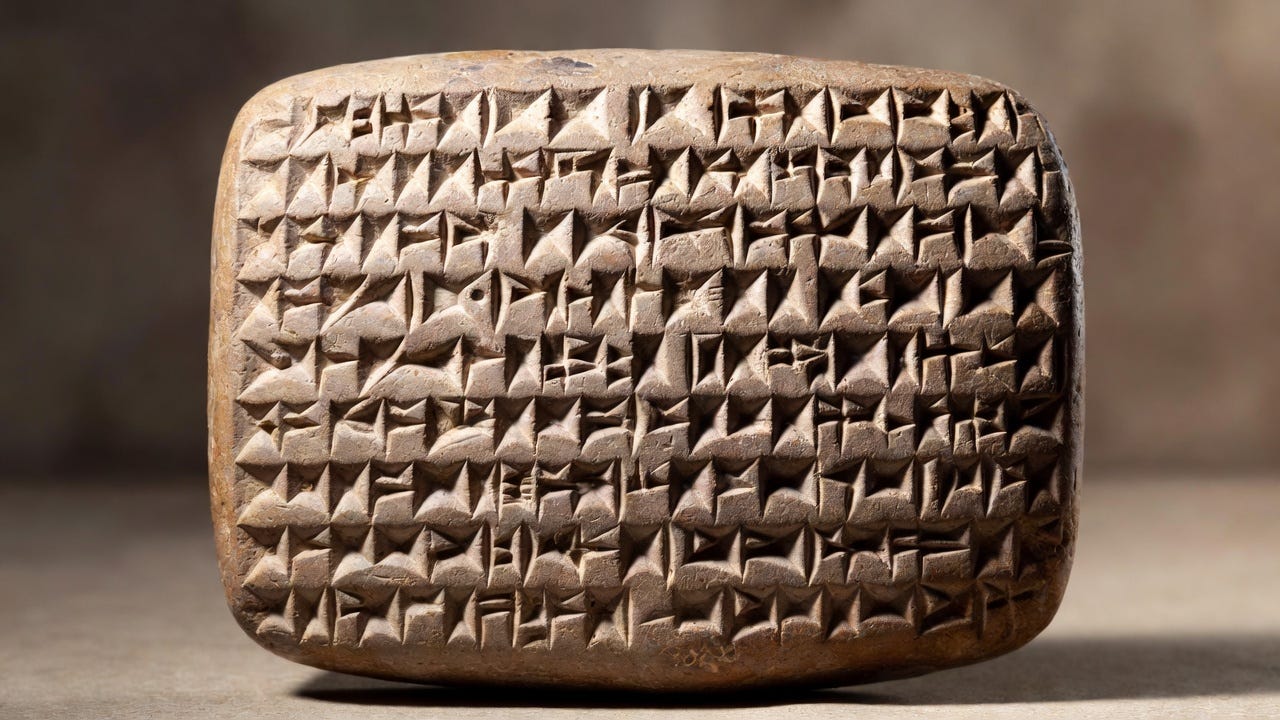
It is about three thousand four hundred years old, the oldest written song we have. When scholars decoded it, they found it built on a seven note scale. The same structure underneath almost every song you have ever loved. The white keys on a piano. Fourteen hundred years before Pythagoras got credit for the mathematics of music, people were writing songs in the musical DNA we still use, and they cared enough to preserve it so it would outlive them by three and a half thousand years. They sent a message forward through time, and the medium they trusted to carry it was music.
Four. Sound binds people together
Return to the flute in the cave. The archaeologists who found it had a theory about why our ancestors bothered, and it is in the actual research. Music helped hold larger groups of humans together, and that social cohesion may have handed our species an advantage over the Neanderthals, who appear to have had less of it.
Say that plainly. There is a serious scientific argument that music is part of the reason we are here and they are not. That bonding a large group through shared sound was a survival technology, letting us cooperate at a scale no other human species could match.
You have felt this. A stadium of strangers singing one song. A congregation. A team in a huddle before they take the field. The separateness drops, and for a few minutes a crowd becomes one thing. Shared rhythm makes strangers trust and cooperate, and it has been tested. The campfire, the drum circle, the chant, the hymn. Different costumes, one technology. Sound is how humans became a we.
Five. Sound aligns the body to a purpose
Every ritual that prepared warriors for battle used rhythm. Every ceremony marking a birth, a death, a harvest moved to sound, because rhythm reaches straight into the motor system. That is why the beat unlocks a frozen Parkinson’s leg. It plugs directly into the movement machinery and routes around the broken parts.
Now watch a modern athlete before they compete. Headphones on, one track, every single time. They are not relaxing. They are aligning, pulling their whole nervous system into a single state on demand, right before the moment that matters. They are doing what a drummer did forty thousand years ago. Same tool, same target. The body, tuned by sound, aimed at a moment.
Medicine, state, memory, connection, alignment. Every culture on Earth discovered the same five, independently, and modern neuroscience keeps confirming they were right. Which raises the only question that matters.
If sound is this powerful, how did we forget?
How we forgot, and who lied to us
We did not forget by accident. We traded the truth for something easier.
For almost all of history, using sound with intention took a skill. A musician, a composer, a drummer, a ritual and someone who knew how to run it. Sound that did something was rare and aimed. Then, in about a century, we made music infinite and free. Every song ever recorded, in your pocket, right now. And in gaining all of it, we lost the one thing that made it matter. Intention.
Look at how you use music today. Background. Filler for silence. Whatever the algorithm serves while you do something else. We hold more sound than any humans in history and aim it with less purpose than any humans in history. Our ancestors carved bone in the dark for one specific sound. We own every sound ever made and press shuffle. The streaming industry sharpened the problem, because it optimized for volume and time on app, never for the question every ancient culture asked first. What is this sound for.
Into that emptiness walked the fakes. The magic frequency crowd will tell you a certain number of hertz heals a certain organ, that tuning your music to 432 hertz aligns you with the universe, that there are secret ancient healing tones. None of it holds up. There is no credible evidence for any of it. It is numerology wearing headphones, and it does real damage, because it poisons the well and makes serious people dismiss the entire subject.
Here is the part worth getting angry about. The real story never needed a drop of that. Music is medicine because of forty thousand years of practice and a shelf of clinical trials, not because of a mystical number. The fake version is small. The true version is enormous. We did not lose the truth about sound because someone disproved it. We lost it under noise, under convenience, and under people selling a counterfeit while the original sat in plain sight.
What comes back
For the entire history of our species, using sound with intention had one flaw. It did not scale. To get sound matched to your exact moment, your body, your purpose, you needed a musician who knew you or a composer writing for you. That was for kings and temples. Everyone else took whatever song already existed and hoped it fit.
That constraint is breaking in our lifetime. For the first time in forty thousand years, sound can be made for the moment you are actually in, and you can own it and build on it. The oldest technology on Earth is meeting the newest.
So here is where a decade of chasing one question lands me. You are not a person who happens to like music. You are a nervous system built by sound, descended from people who carved bone in the dark to reach a state on purpose. The instrument keeps changing. Bone, then string, then wire, then code. The purpose has never changed once.
The message was never hidden. It was scattered across forty thousand years and every culture that ever lived, waiting for the tools to catch up to the truth. The tools just caught up. The only thing left to do is what our ancestors already knew to do.
Use it on purpose.
I write about this because I am building it. HitZERØ is the streaming network for human potential, and the idea underneath it has a name: Sonic Intelligence. Sound as a functional input to the human being, aimed with intention, personal to you, owned by you. Not a frequency, not a vibe. A forty thousand year old function, finally given a modern body. We call it the soundtrack of being human. More on that soon.
Fact notes: bone and ivory flutes from the Swabian Jura, dated 42,000 to 43,000 years. Mehr et al., “Universality and diversity in human song,” Science, 2019, sixty societies. Rhythmic auditory stimulation in Parkinson’s, meta analysis of 18 studies and 774 subjects. Salimpoor et al., Nature Neuroscience, 2011, dopamine release measured by PET. Hurrian Hymn No. 6 from Ugarit, circa 1400 BCE, heptatonic scale. Melodic intonation therapy and music response in dementia are established clinical findings. 432 Hz and Solfeggio “healing frequencies” have no scientific support and are named and rejected on purpose.